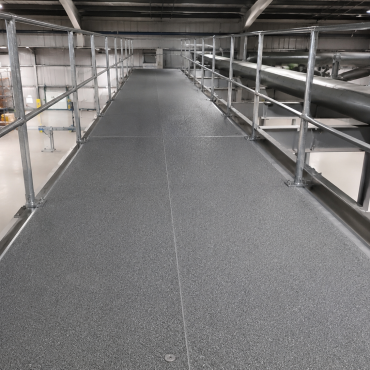
GRP grating, also known as fibreglass grating, is a strong, lightweight and corrosion-resistant flooring material used across a wide range of industrial and commercial environments. It is manufactured from glass reinforced plastic (GRP), combining glass fibres with a resin system to create a durable, non-metallic alternative to traditional steel or aluminium grating.
GRP grating is particularly valued for its anti-slip properties, resistance to chemicals and moisture, and long service life with minimal maintenance.
What Is GRP Grating Made From?
GRP grating is produced using layers of fibreglass reinforcement bonded together with a resin system, commonly an ISO or isophthalic polyester resin. The finished product is moulded or pultruded to form an open mesh structure with a gritted non-slip surface.
A surface veil is often added during manufacture to improve UV resistance, corrosion resistance and overall durability, making GRP grating suitable for both internal and external use.
Key Benefits of GRP Grating
GRP grating offers several advantages over traditional metal grating:
-
Excellent slip resistance, even in wet or oily conditions
-
Corrosion resistant, ideal for harsh or chemical environments
-
Lightweight, making handling and installation easier
-
Non-conductive, reducing electrical and thermal risks
-
Low maintenance, with no rusting or painting required
-
Fire retardant, with many products compliant with BS476 standards
These properties make GRP grating a popular choice in environments where safety, longevity and performance are critical.
Common Types of GRP Grating
There are several types of GRP grating available, each suited to different applications:
-
Standard open mesh grating – ideal for walkways, platforms and general flooring
-
Mini mesh grating – features smaller openings for improved pedestrian safety
-
Covered top grating – provides a more solid walking surface while retaining drainage
-
Heavy-duty grating – designed for higher load requirements
Choosing the correct type depends on factors such as load, environment and foot traffic.
Where Is GRP Grating Used?
GRP grating is widely used across many sectors due to its versatility and performance.
Common applications include:
-
Industrial flooring and walkways
-
Platforms and mezzanines
-
Trenches and service risers
-
Water treatment and processing plants
-
Manufacturing and engineering facilities
-
Outdoor access routes and ramps
-
Areas exposed to moisture, chemicals or corrosive conditions
It is particularly effective in locations where steel grating would corrode or become slippery over time.
GRP Grating vs Traditional Materials
Compared to steel or aluminium grating, GRP grating offers a longer service life in corrosive environments and significantly reduces ongoing maintenance costs. While the initial cost can be higher than mild steel, the whole-life cost is often lower due to reduced replacement and maintenance requirements.
Choosing the Right GRP Grating
When selecting GRP grating, it’s important to consider:
-
Required load capacity
-
Grating thickness
-
Mesh size (standard or mini mesh)
-
Environmental conditions
-
Slip resistance requirements
Using the correct specification ensures both safety and long-term performance.
GRP grating FAQs
What does GRP stand for?
GRP stands for Glass Reinforced Plastic, also known as fibreglass. GRP grating is made by setting glass fibres in a resin to create a strong, lightweight material that does not rust or corrode.
What is GRP grating used for?
GRP grating is used for anti-slip flooring, walkways, platforms, stair treads and access areas, especially in wet, corrosive or chemical environments where steel would rust.
Is GRP grating stronger than steel?
Weight for weight GRP is very strong, and unlike steel it does not corrode, conduct electricity or need painting. Steel carries higher absolute point loads, so the best choice depends on the application.