
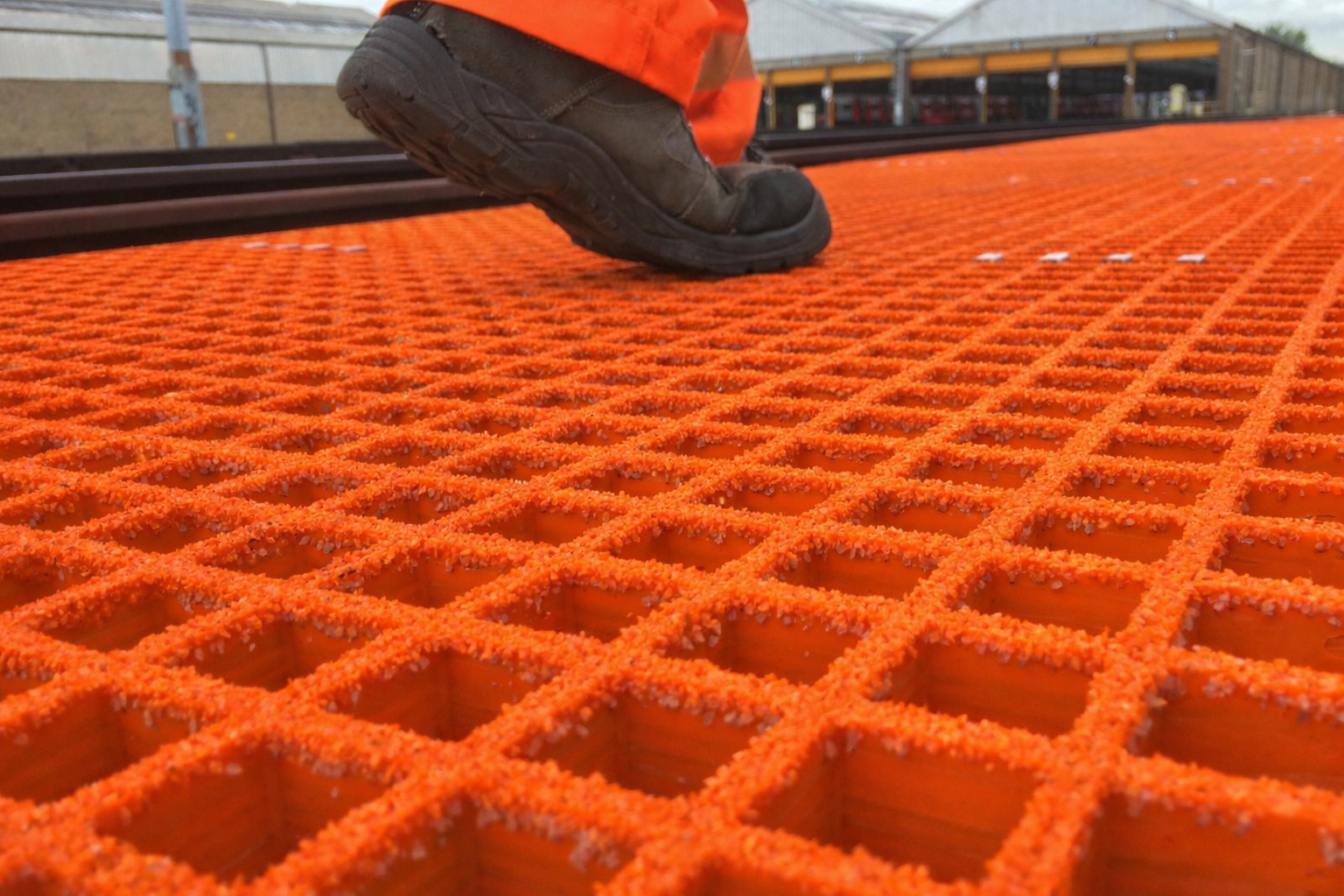
How to Choose the Right GRP Grating Thickness and Load Rating
Choosing the correct GRP grating thickness and load rating is essential for safety, durability and long-term performance. Whether you are installing a walkway, platform, or industrial floor, selecting the wrong specification can lead to excessive flex, premature wear, or even structural failure.
This guide explains how GRP grating load ratings work and how to choose the correct thickness for your application.
What does GRP grating thickness mean?
GRP grating thickness refers to the depth of the load-bearing bars, typically measured in millimetres. The most common thicknesses are:
-
25 mm (light duty)
-
30 mm (general purpose)
-
38 mm (heavy duty)
-
50 mm (extra heavy duty)
In general, the thicker the grating, the higher the load it can safely support and the longer the span it can cover.
Understanding load rating and deflection
GRP grating is designed to support weight safely without excessive deflection (bending).
Load rating depends on three key factors:
-
Grating thickness
-
Support span (distance between supports)
-
Load type (people, equipment, vehicles)
A thicker grating will support heavier loads and longer spans.
Excessive deflection can:
-
Feel unsafe underfoot
-
Cause damage over time
-
Reduce lifespan
Industry standard practice limits deflection to approximately span ÷ 200.
Typical GRP grating thickness and applications
25 mm GRP grating – Light duty
Best for:
-
Pedestrian walkways
-
Access platforms
-
Roof walkways
-
Low traffic areas
Not suitable for heavy equipment or vehicle traffic.
30 mm GRP grating – General purpose
Best for:
-
Industrial walkways
-
Factory flooring
-
Plant access areas
-
Mezzanines
This is one of the most commonly used thicknesses.
38 mm GRP grating – Heavy duty
Best for:
-
High traffic industrial areas
-
Equipment platforms
-
Loading areas
-
Water treatment plants
Provides significantly higher strength and stiffness.
50 mm GRP grating – Extra heavy duty
Best for:
-
Forklift traffic (with proper support spacing)
-
Heavy industrial use
-
Wide spans
-
High load environments
Offers maximum strength and durability.
The importance of support span
The distance between supports has a major impact on load capacity.
For example:
-
A 38 mm grating may support heavy loads over a short span
-
But the same grating may require additional support over a longer span
Always consider:
-
Support spacing
-
Expected load
-
Safety margin
Reducing support spacing increases strength and safety.
Common applications and recommended thickness
|
Application |
Recommended thickness |
|---|---|
|
Pedestrian walkways |
25 mm |
|
Industrial walkways |
30 mm |
|
Platforms and plant areas |
30 mm or 38 mm |
|
Heavy industrial use |
38 mm |
|
Forklift or heavy loads |
50 mm |
Why choosing the correct specification matters
Using the correct GRP grating ensures:
-
Maximum safety
-
Longer lifespan
-
Proper load support
-
Compliance with safety standards
-
Reduced maintenance costs
Choosing too thin a grating can result in excessive flex and reduced durability.
Choosing too thick may increase costs unnecessarily.
Other factors to consider
In addition to thickness and load rating, consider:
-
Mesh size (standard or mini mesh)
-
Anti-slip surface
-
Chemical resistance requirements
-
Environmental conditions
-
Support structure design
Expert advice for your project
Every project is different, and the correct GRP grating depends on your specific load and support conditions.
If you are unsure, it is always best to consult with a specialist supplier who can recommend the correct specification.
Choosing the right GRP grating ensures a safe, durable and cost-effective solution that will last for decades.
